Employee Complaint Management: How to Handle Reports Without Creating Legal Risk
The way an organization handles employee complaints often determines its legal outcome more than the underlying facts. This guide covers the complaint management process — intake, triage, investigation, resolution, and documentation — that keeps HR defensible.
VoxWel Team
Workplace Safety Advocates
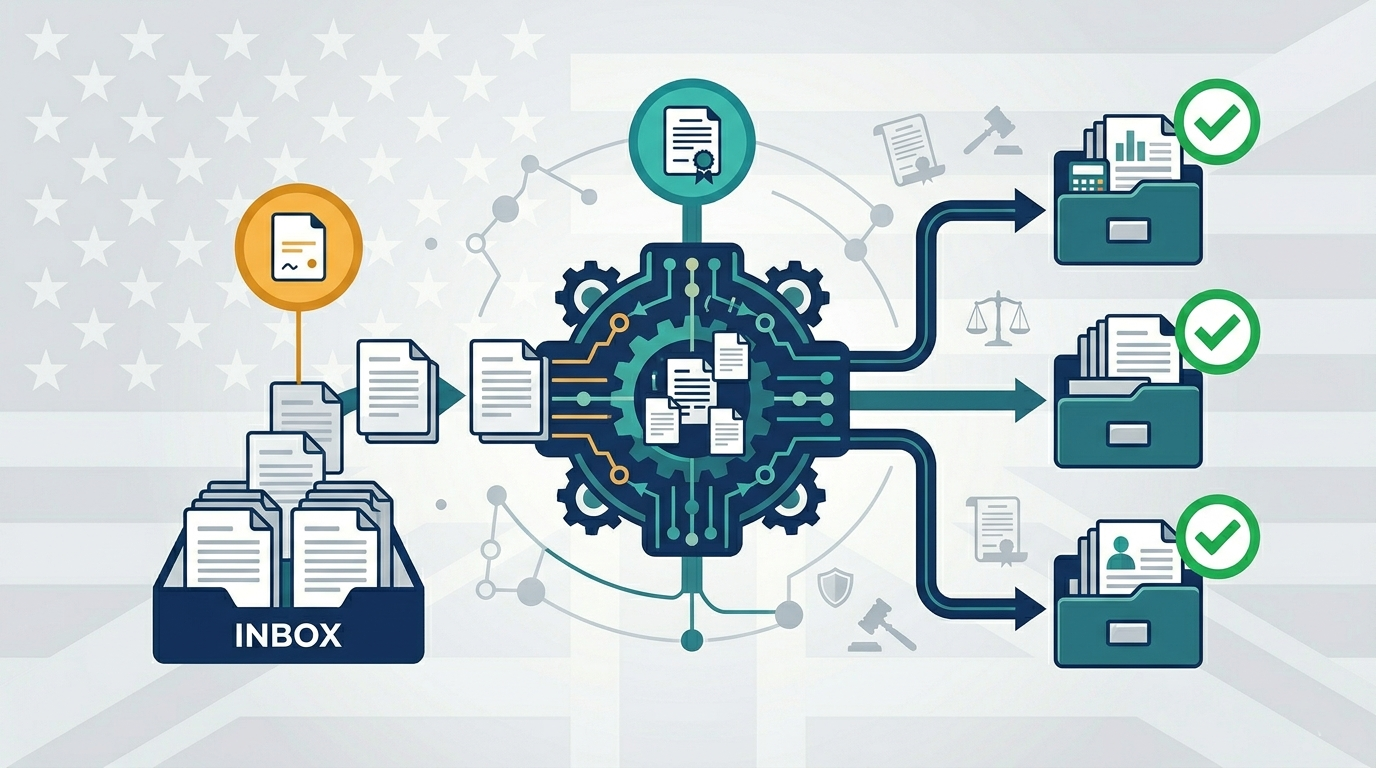
Try VoxWel Free
Anonymous reporting — live in 24 hours
Free Resource
Employee Complaint Management Workflow Template
A customizable workflow diagram and process document for managing complaints from intake to resolution — includes SLA timers, escalation triggers, and documentation checkpoints.
Download the Workflow TemplateEmployee Complaint Management: How to Handle Reports Without Creating Legal Risk
Here is the finding that most HR Directors find counterintuitive: the organization's handling of an employee complaint often creates more legal risk than the original complaint.
A manager who makes a discriminatory remark -- an isolated incident, documented by one witness, no pattern -- creates limited legal exposure. The same remark, followed by a poorly handled complaint process -- delayed response, inadequate investigation, confidentiality breach, retaliatory treatment of the reporter -- creates an employment tribunal claim that costs six figures to defend and potentially more to resolve.
Complaint management is not administrative process. It is legal risk management.
This guide covers the employee complaint management process from first contact to resolution, the documentation requirements at every stage, the most common handling errors that create liability, and how complaint management software changes what is achievable for HR teams without large dedicated resources.
The Employee Complaint Management Process
Stage 1: Intake
The complaint management process begins the moment a concern reaches HR. The intake stage determines the trajectory of everything that follows.
What intake must capture:
- Date and time of receipt
- Channel through which the complaint was received (meeting, email, anonymous platform, manager referral)
- Identity of the person receiving the complaint on behalf of the organization
- A clear, specific record of what was alleged -- what happened, when, where, who was involved, and who else witnessed it
- Whether any immediate protective action is required
Intake quality matters. A vague initial record -- "employee raised concerns about manager" -- is useless if the matter later becomes disputed. An intake record that captures the specifics -- "employee reported that on [date] in [location], their manager said [content] in front of [witness]" -- provides the factual foundation for everything that follows.
Immediate acknowledgment. Within 24 hours of intake. The acknowledgment is not a substantive response. It is the signal to the reporter that the organization has received the concern and is taking it seriously. Failure to acknowledge creates the "black hole" experience that damages both the immediate relationship and the longer-term reporting culture.
For anonymous complaints: The acknowledgment goes through the reporting platform's two-way messaging system. Every anonymous reporter should receive: acknowledgment of receipt, an explanation of the next step, and an estimated timeline. This is both good practice and, for EU-regulated organizations, a legal requirement.
Stage 2: Triage
Not every complaint requires the same response. The triage stage assesses the complaint and determines the appropriate path.
Questions that determine the path:
Is this a matter of public interest (potential whistleblowing under PIDA or EU Directive), or a personal employment grievance? The distinction matters legally and procedurally.
Is there an immediate safety risk? If so, protective action comes before investigation.
Is this isolated or part of a potential pattern? A single complaint about a manager may be a grievance. Three complaints about the same manager from different employees may be evidence of systemic misconduct requiring a different level of response.
What is the severity? Minor process disputes follow different paths from harassment and fraud allegations.
Is there a conflict of interest in who should receive this complaint? A complaint about a senior HR leader should not be managed by the HR team that reports to that leader.
The triage decision must be documented. Who made it, on what basis, and why the selected path was appropriate.
Stage 3: Investigation
The investigation process is covered in detail in our workplace investigation guide. For complaint management purposes, the key documentation requirements are:
- Investigation plan: who is investigating, what they are looking for, timeline
- Evidence log: what was gathered, when, from whom, and in what form
- Interview records: who was interviewed, when, with notes confirmed as accurate by the interviewee
- Analysis: how conflicting accounts were weighed
- Conclusion: what was found on the balance of probabilities
The investigation is the most document-intensive stage. Organizations that treat investigation notes as temporary working documents rather than permanent legal records routinely discover, in tribunal disclosure processes, that they cannot reconstruct their decision-making. The rule is: if you would need it to defend your decision in a tribunal, write it down at the time.
Stage 4: Resolution and Communication
Resolution covers the action taken following the investigation conclusion -- whether that is a disciplinary process, a remediation conversation, mediation, policy change, or a finding of no case to answer.
Resolution communication has two audiences:
The reporter needs to know that their complaint was taken seriously and that action was taken. They do not need the details of the subject's position or the specific disciplinary outcome. They need enough information to understand that the process was genuine. For EU organizations, this feedback must be provided within three months of acknowledgment.
The subject needs to be informed of the outcome of the investigation and, where applicable, the disciplinary process that follows.
Both communications should be documented -- what was communicated, to whom, when, and through what channel.
Stage 5: Post-Resolution Monitoring
Many complaint management processes stop at resolution. This is a mistake.
Retaliation -- the most legally dangerous post-complaint risk -- typically happens in the weeks and months after resolution. Check in with the reporter at 30 days and 90 days after resolution. Not with intrusive questions, but with a visible signal that the organization is monitoring their experience.
Document these check-ins. If retaliation is later alleged, the documentation of these check-ins -- and what they revealed -- is part of your defense.
Documentation: The Foundation of Defensible Complaint Management
The most common reason organizations lose employment disputes they should win is insufficient documentation.
Employment tribunals and courts review the employer's paper trail when evaluating whether a complaint was handled fairly. They are looking for: evidence that the complaint was taken seriously (timely acknowledgment), evidence that the investigation was independent (investigator selection documented), evidence that both parties were heard (investigation interview notes), evidence that the conclusion was reasoned (analysis documentation), and evidence that the decision was not retaliatory (post-resolution employment decisions documented with legitimate rationale).
Organizations that manage complaints through email threads and informal meetings -- without structured documentation at each stage -- cannot produce this evidence. Organizations that use complaint management software that automatically creates timestamped records of every action can.
The Most Common Handling Errors
Delay without communication. Complaints that sit unacknowledged for days, or investigated for months without communication, signal disregard -- to parties and to any subsequent tribunal.
Confidentiality breach. The most common source of retaliation is that the reporter's identity or the substance of their complaint was shared more widely than necessary. The rule is: minimum distribution. Only those who need to know for operational or investigation purposes.
Biased investigation appointment. The person assigned to investigate must have no relationship with either party that could compromise their independence. This is checked at the point of appointment, not discovered after the investigation is complete.
Skipping the response opportunity. The subject of the complaint must have a meaningful opportunity to respond to the specific allegations before any conclusion is reached. An investigation that reaches a conclusion without this step is procedurally unfair regardless of whether the conclusion is correct.
Inadequate follow-through. A complaint that was received, investigated, and found to be substantiated -- but where no visible action resulted -- is worse for the reporting culture than no reporting system at all. It tells every employee who knows about it that the system produces paper, not outcomes.
How Complaint Management Software Changes What Is Possible
Manual complaint management -- email threads, shared drives, meeting notes -- fails the documentation standard in ways that are predictable and preventable.
Purpose-built complaint management software automates what manual processes cannot: every action timestamped, every communication logged, every status change recorded, acknowledgment timelines tracked, retention periods automated.
The value is not convenience. The value is that the documentation exists, is consistent, and was created contemporaneously -- not reconstructed under legal pressure.
VoxWel: Complaint Management Built for HR
VoxWel handles the full complaint management lifecycle: anonymous intake via QR code or web link, automated acknowledgment, two-way anonymous messaging, case management dashboard, seven-stage workflow with automated status tracking, and full audit trail from first report to final resolution.
Every report is documented. Every action is timestamped. Every communication is logged. The audit trail that defends your process is created automatically, without additional HR effort.
At $1 per employee per month, it is significantly less expensive than the documentation failures it prevents.
Start a 14-day free trial at voxwel.com.
VoxWel is an anonymous employee reporting platform for HR and compliance teams. Learn more at voxwel.com.
Table of Contents
Try VoxWel Free
Set up your anonymous reporting channel in 24 hours. No credit card required.
- AES-256 encrypted
- EU Directive compliant
- $1/employee/month
Free Resource
Employee Complaint Management Workflow Template
A customizable workflow diagram and process document for managing complaints from intake to resolution — includes SLA timers, escalation triggers, and documentation checkpoints.
Download the Workflow TemplateReady to protect your workplace?
Join 500+ companies using VoxWel for anonymous reporting. Setup takes 24 hours. No IT project required.
Continue Reading
7 Types of Employee Fraud: Red Flags, Detection Methods, and Prevention
The Association of Certified Fraud Examiners estimates that organizations lose 5% of annual revenue to occupational fraud. Most fraud is detected not by audits or management review, but by tips — and organizations with anonymous reporting channels detect fraud 50% faster.

How to Investigate Workplace Discrimination: A Step-by-Step Guide for HR
When a discrimination complaint is received, HR has a legal duty to investigate promptly, thoroughly, and impartially. Most HR teams handle fewer than five discrimination investigations per year — which means every one is high-stakes and unfamiliar. This guide provides the process.

Workplace Ethics Policy: How to Write One That Actually Changes Behavior
A workplace ethics policy that sits in a document nobody reads changes nothing. This guide covers what an effective ethics policy must contain, how to communicate it so employees engage with it, and the reporting infrastructure that makes it real.