What Is a Compliance Hotline? (And Why Your Company Needs More Than a Phone Number)
A compliance hotline lets employees report ethics violations, fraud, harassment, and legal breaches — and is a regulatory requirement for many organizations. This guide explains what it is, what it must do, and why a phone number alone is no longer sufficient.
VoxWel Team
Workplace Safety Advocates
Try VoxWel Free
Anonymous reporting — live in 24 hours
Free Resource
Compliance Hotline Evaluation Checklist
A 15-point checklist to evaluate whether your current compliance hotline meets modern standards — includes anonymity, accessibility, and EU Directive requirements.
Download the Evaluation ChecklistWhat Is a Compliance Hotline? (And Why Your Company Needs More Than a Phone Number)
A compliance hotline is a dedicated channel through which employees, contractors, and other stakeholders can report suspected violations of law, organizational policy, or ethical standards -- typically with anonymity protections.
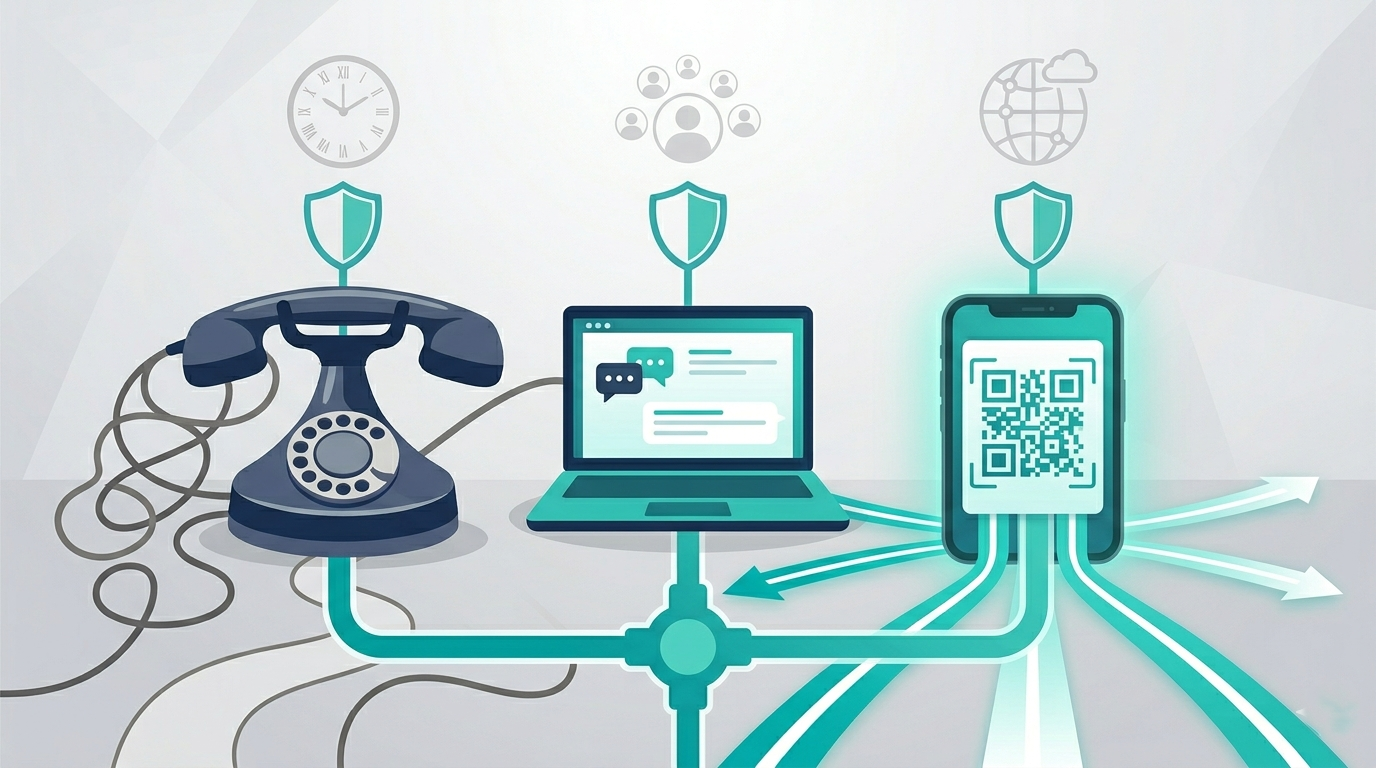
The name suggests a telephone. Increasingly, that is a legacy association. Modern compliance hotlines are digital reporting platforms that may or may not include a telephone option, delivered through web interfaces, QR codes, and mobile applications that employees can access from any device at any time.
This guide explains what a compliance hotline is designed to do, what the regulatory requirements are, what distinguishes an effective hotline from an ineffective one, and why most organizations that still rely solely on phone-based hotlines are leaving a significant portion of their compliance intelligence unreported.
What a Compliance Hotline Is Designed to Do
A compliance hotline serves three functions simultaneously.
Detection. It provides employees with a channel to report misconduct, fraud, safety violations, ethics breaches, and legal violations that they would not report through normal management channels -- either because management is implicated, because they fear retaliation, or because there is no other appropriate channel.
Deterrence. The visible existence of a reporting channel -- communicated regularly and trusted by employees -- changes the risk calculation of those considering misconduct. When employees know that colleagues can report anonymously, and that reports are investigated, the operating environment for misconduct becomes less permissive.
Documentation. The reports received through a compliance hotline, and the investigation and resolution records associated with them, constitute the compliance program documentation that regulators, boards, and courts use to assess whether an organization's compliance function is effective.
Regulatory Requirements for Compliance Hotlines
Several regulatory frameworks either require or strongly expect compliance hotlines.
Sarbanes-Oxley Act (US, public companies): Section 301 requires audit committees of listed companies to establish procedures for the receipt and treatment of anonymous employee complaints about accounting, internal controls, and auditing matters. This requirement, combined with SEC enforcement practice, has made compliance hotlines standard infrastructure for US public companies.
EU Whistleblowing Directive (2019/1937): Requires organizations with 50+ employees in EU member states to maintain a secure internal reporting channel. The directive specifies anonymity requirements, acknowledgment timelines, two-way communication capability, and reporter protection standards that a phone-only hotline may not fully satisfy.
UK Public Interest Disclosure Act (PIDA): Does not explicitly require a hotline but creates legal obligations for organizations that receive protected disclosures. Organizations without formal reporting infrastructure face greater difficulty demonstrating appropriate handling of disclosures in tribunal proceedings.
Financial Conduct Authority (UK FCA) and European financial regulators: Regulated financial services entities face specific whistleblowing channel requirements under FCA Handbook PS15/24 and equivalent EU financial regulation. These requirements include designated senior manager responsibility for whistleblowing, annual board reporting, and specific protection standards.
US Department of Justice guidance: DOJ evaluation criteria for corporate compliance programs explicitly ask whether effective anonymous reporting channels exist and whether they are actively used. Programs with low or no hotline utilization are viewed as indicators of compliance program ineffectiveness.
What Makes a Compliance Hotline Effective vs. Ineffective
The existence of a hotline does not make it effective. The research on compliance program effectiveness consistently identifies several differentiating factors.
Accessibility
A hotline that employees cannot easily access when they have a concern will not be used. Accessibility means: available on any device, at any time, without friction. A web link or QR code that opens a report form in 30 seconds on a smartphone is more accessible than a phone number that requires finding privacy, dialing, and speaking to a stranger.
Genuine anonymity
Employees make a rapid assessment of whether the reporting channel is genuinely anonymous. A phone call that can be traced through call records, or a form submitted from a work device on a work network, does not pass this assessment. Technical zero-knowledge encryption -- where report data is encrypted before leaving the reporter's device -- provides the level of anonymity that actually changes employee reporting behavior.
Two-way communication
A one-way submission system -- where employees can report but cannot communicate further about their report -- creates the "black hole" perception that tells employees nothing will happen. Compliance hotlines with two-way anonymous communication allow investigators to gather additional information, tell reporters what is being done, and satisfy EU Directive feedback requirements.
Visible follow-through
Reports that are received, investigated, and resolved generate compliance value. The same reports, received and ignored, damage the reporting culture. Organizations that want high hotline utilization must demonstrate, through communication about aggregate outcomes, that reports lead to action.
Consistent promotion
Compliance hotlines are not permanent fixtures in employee consciousness. They require ongoing promotion -- mentioned in onboarding, visible in physical spaces through QR codes, referenced in management communications -- to remain the first option employees think of when they have a concern.
Phone vs. Digital: The Impact on Compliance Program Effectiveness
The Ethics and Compliance Initiative has measured the difference in report volumes between organizations using phone hotlines and those using digital reporting channels. Digital channels consistently generate approximately five times the report volume of phone-only channels.
This is not a feature difference -- it is an accessibility difference. The phone call requires: finding a private space, finding the number, waiting on hold, speaking aloud to a stranger, answering structured questions in real time, and doing all of this during staffed hours. Each step is friction. Each friction point generates attrition from the reporting funnel.
The digital channel requires: scanning a QR code, spending 3–5 minutes completing a form, and submitting. From any device, at any time, with no voice involved.
For compliance programs assessed by the DOJ, SEC, or EU data protection authorities against the standard of whether the channel is "effectively used," the utilization difference between phone and digital channels matters. A compliance program with a phone hotline that receives 10 reports per year is demonstrably less effective than one with a digital channel receiving 50 reports per year -- and the difference is the channel design, not the organization.
What a Modern Compliance Hotline Includes
A compliance hotline that satisfies regulatory requirements and generates meaningful report volumes in 2025 includes:
- Anonymous digital reporting via web link and QR code, accessible on any device, without account creation
- Mobile optimization -- the majority of report submissions happen on smartphones; a non-mobile-optimized form is a significant friction point
- File attachment capability -- evidence that supports a report (screenshots, documents, images) should be submittable with the report, not just described
- Structured intake -- category selection (fraud, harassment, safety, discrimination, ethics, other) and description fields that capture the information investigators need
- Automated acknowledgment -- confirmation sent to the reporter immediately upon submission
- Two-way anonymous messaging -- the ability for investigators to communicate with anonymous reporters throughout the case
- Case management dashboard -- a secure environment for HR and compliance staff to manage reports, assign cases, track status, and document actions
- Automated audit trail -- timestamped record of every case action, satisfying regulatory documentation requirements
- GDPR-compliant data handling -- configurable retention periods, access controls, and a Data Processing Agreement with the platform provider
- Telephone option (recommended for some workforces) -- for employees who prefer voice-based reporting or lack digital access
VoxWel: A Modern Compliance Hotline Built for HR
VoxWel provides all the components of a modern compliance hotline -- anonymous digital reporting, mobile-first UX, two-way anonymous messaging, automated acknowledgment, case management, and audit trail -- at $1 per employee per month.
For organizations currently spending $500–$2,000 per month on a phone-only hotline, VoxWel provides superior compliance infrastructure -- higher report volumes, stronger technical anonymity, better documentation, full EU Directive compliance -- at a fraction of the cost.
Setup in under 24 hours. 14-day free trial at voxwel.com.
VoxWel is an anonymous employee reporting platform for HR and compliance teams. Learn more at voxwel.com.
Table of Contents
Try VoxWel Free
Set up your anonymous reporting channel in 24 hours. No credit card required.
- AES-256 encrypted
- EU Directive compliant
- $1/employee/month
Free Resource
Compliance Hotline Evaluation Checklist
A 15-point checklist to evaluate whether your current compliance hotline meets modern standards — includes anonymity, accessibility, and EU Directive requirements.
Download the Evaluation ChecklistReady to protect your workplace?
Join 500+ companies using VoxWel for anonymous reporting. Setup takes 24 hours. No IT project required.
Continue Reading
7 Types of Employee Fraud: Red Flags, Detection Methods, and Prevention
The Association of Certified Fraud Examiners estimates that organizations lose 5% of annual revenue to occupational fraud. Most fraud is detected not by audits or management review, but by tips — and organizations with anonymous reporting channels detect fraud 50% faster.

How to Investigate Workplace Discrimination: A Step-by-Step Guide for HR
When a discrimination complaint is received, HR has a legal duty to investigate promptly, thoroughly, and impartially. Most HR teams handle fewer than five discrimination investigations per year — which means every one is high-stakes and unfamiliar. This guide provides the process.

Workplace Ethics Policy: How to Write One That Actually Changes Behavior
A workplace ethics policy that sits in a document nobody reads changes nothing. This guide covers what an effective ethics policy must contain, how to communicate it so employees engage with it, and the reporting infrastructure that makes it real.